Not A Cornfield
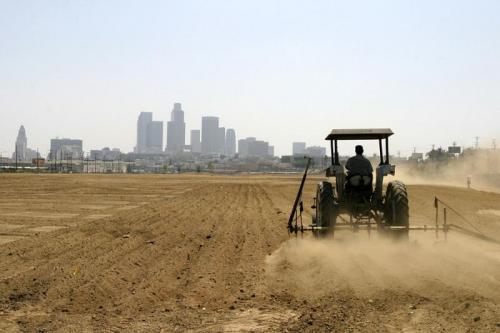
The Not a Cornfield project transformed an industrial brownfield site in Los Angeles into a living sculpture in the form of a field of corn for one agricultural cycle. The art piece redeemed a lost but fertile ground, transforming what was left from the industrial era into a renewed space for the public. The process and attention generated around the project also brought forth questions about the nature of urban public spaces; questions of whose history a “historical park” in the Los Angeles city center would describe, and questions about the politics of land use and its incumbent inequities. The 32-acre plot that comprised the site, known as “The Cornfield” by Angelenos, has had a varied and contentious history. Tongya native villages had existed in this area for more than two millennia when outside explorers arrived in 1760. Located half a mile from the original city center and 150 feet from the Los Angeles River, the site was also home to the Zanja Madre, or “Mother Ditch” – a key section of Los Angeles’s initial water system. The Southern Pacific railroad company has also used the land as a railyard, and MTA Gold Line cars continue to run a few feet to the west of the site. In 2001, the land was designated a state park, thanks to the efforts of a coalition of community, environmental, and political activists. Artist Lauren Bon brought in more than 1,500 truckloads of earth to prepare the rocky and mixed terrain for the planting of corn. The project featured 875,000 seeds of multicolor “Indian” or “Feed” corn, planted mostly by machine along 82 miles of furrows over 25 acres of the plot. In the “eye” or spiral spiritual epicenter, Hopi Red and Hopi Blue corn varieties were hand-planted during Sunday afternoon communal events and ceremonies.